
Setting My Boots on a Fresh Blue Mountains Ridge as We Dive Into Scale Canyons in the Blue Mountains.
There’s a moment—right before you clip into a fixed abseil chain at the start of a slot canyon—when your stomach does a little flip and your brain asks, “Did I pack enough snacks for this?” That’s when Scale Canyons in the Blue Mountains shifts from a weekend wander into a proper sandstone adventure. The Blue Mountains National Park is where steep gullies, cold plunge pools and sandstone overhangs meet some of the best canyoning routes on the continent.
I’ve guided, scrambled, shivered and sworn my way through more Blue Mountains canyons than I care to admit, and this guide pulls together the real, lived-in tips that keep you upright, warm-ish and grinning like a galah at the end of the day.
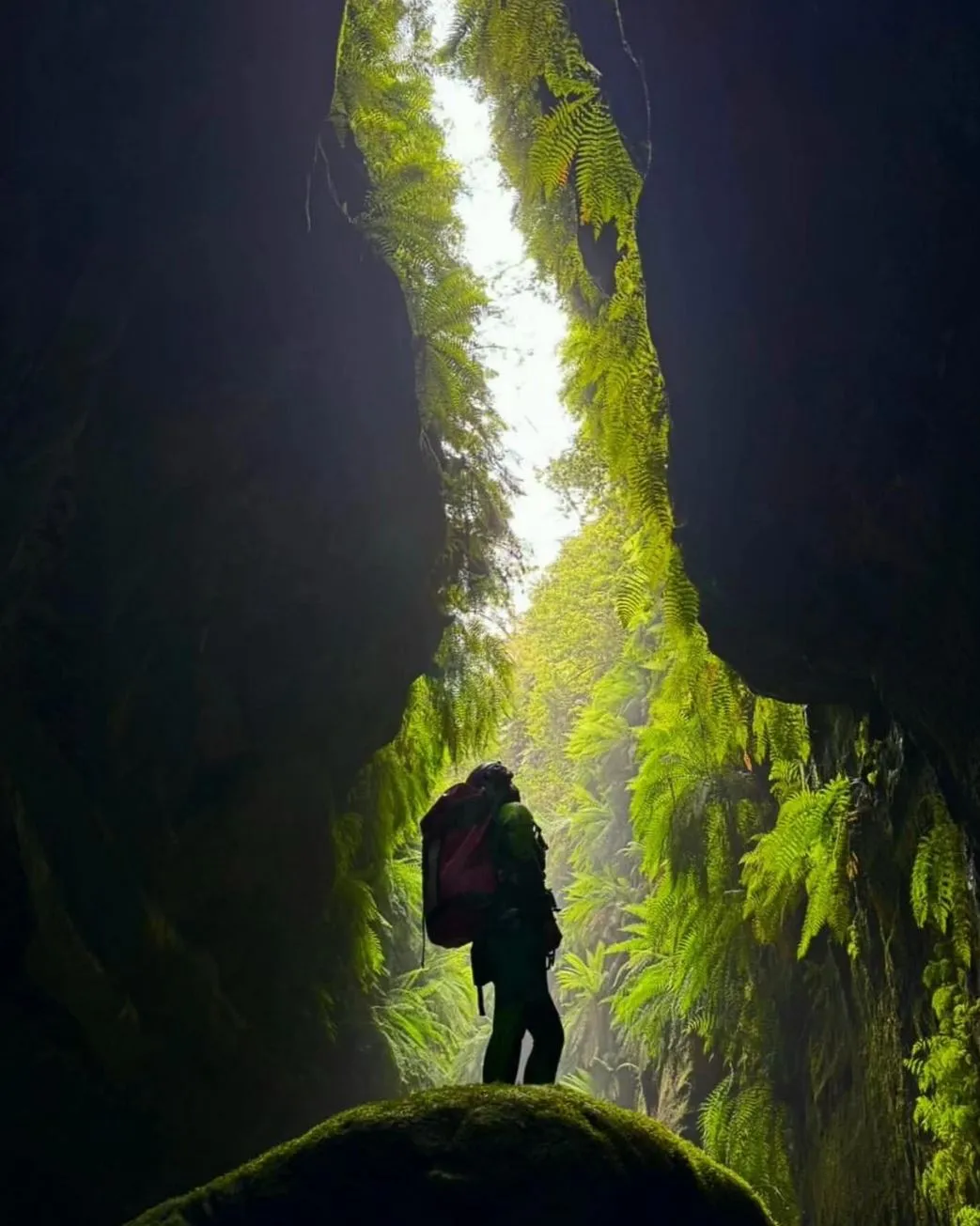
With over 900 canyons cutting through the Grose Valley and Jamison Valleys, there’s a canyon for every skill set. But here’s the truth: canyon ratings in NSW often follow the French Scale, and if you ignore that, you’ll be halfway down a waterfall wishing you’d studied more canyon beta before leaving the car park.
If you’re starting from the Great Western Hwy, Scenic World, Echo Point Lookout, or the main walking track at Neates Glen trackhead, choose a canyon that matches your technical ability—not your ego. NSW National Parks & Wildlife Service classifies many access routes as Grade 4 trails, meaning steep stairways, ladders, rock paths and occasional scrambling.
Even the “easy” canyons here won’t let you stroll in like you’re heading to the milk bar. Expect cold water, short abseils, slippery boulders and one of your mates will stack it right where the GoPro is pointed.
These entry-level options give you everything you want: movement, scenery and just enough challenge to keep the adrenaline simmering.

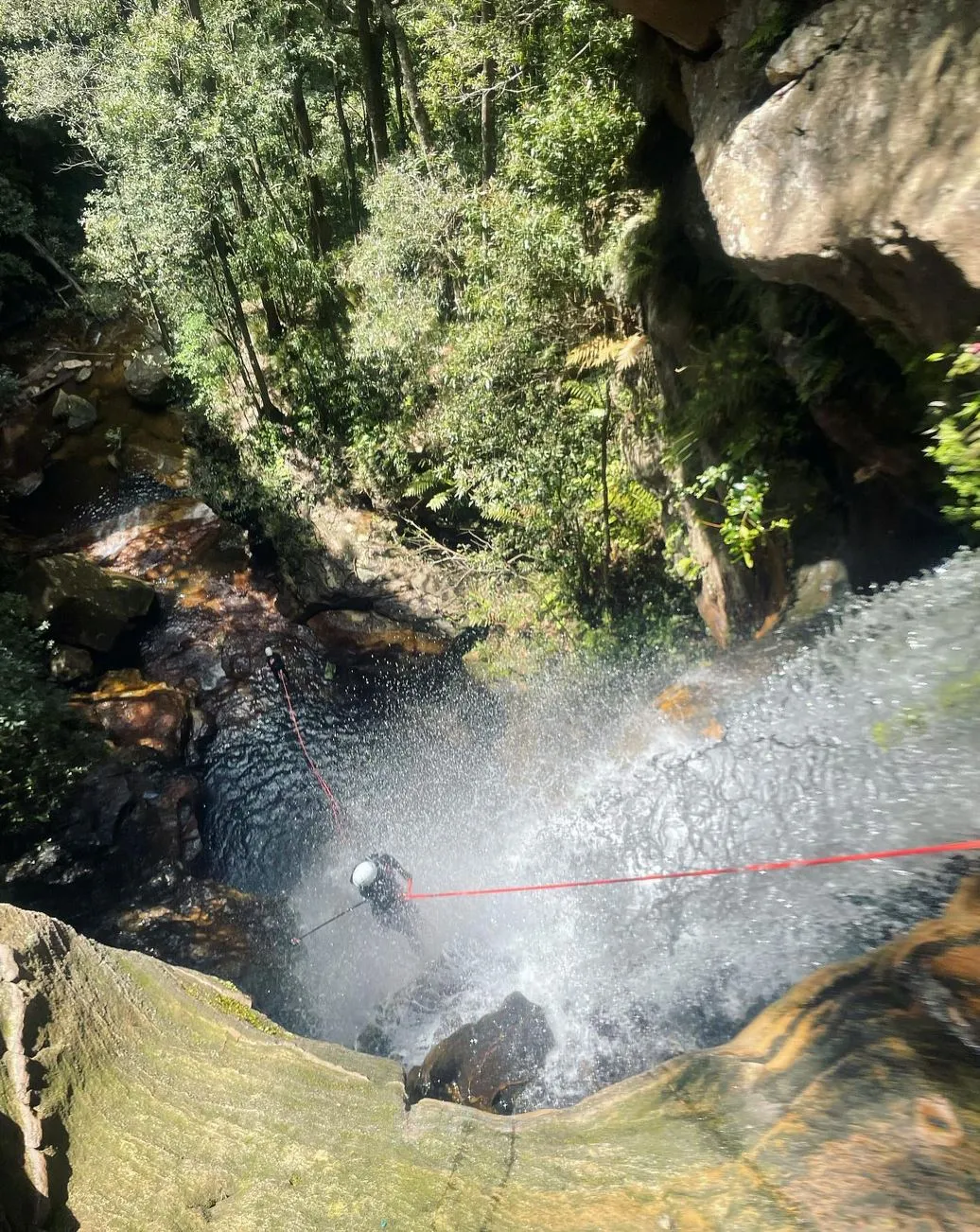
Empress Canyon is a proper initiation into Blue Mountains canyoning: narrow slots, moving water and that final abseil down a roaring waterfall. The walk-in follows established walkways and stairways—built within Heritage fabric rules and NSW Heritage Office standards—to minimise environmental impact and protect World Heritage values.
Expect:
Juggler Canyon drops you through several fun abseils before linking back to the cliff-top country around Katoomba. You’ll pass through fern-lined gullies and water-polished rocks shaped by Greaves Creek.
Expect:
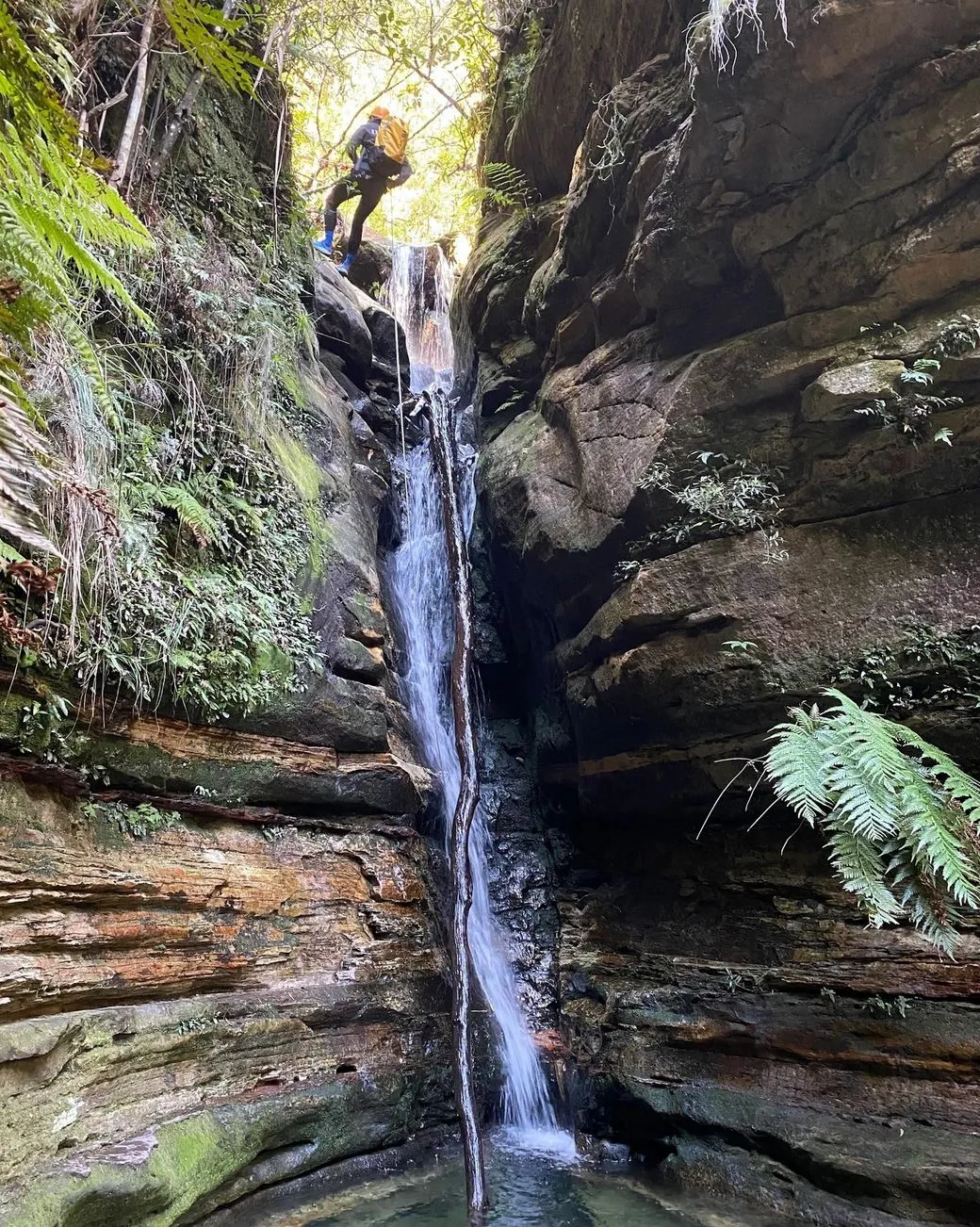
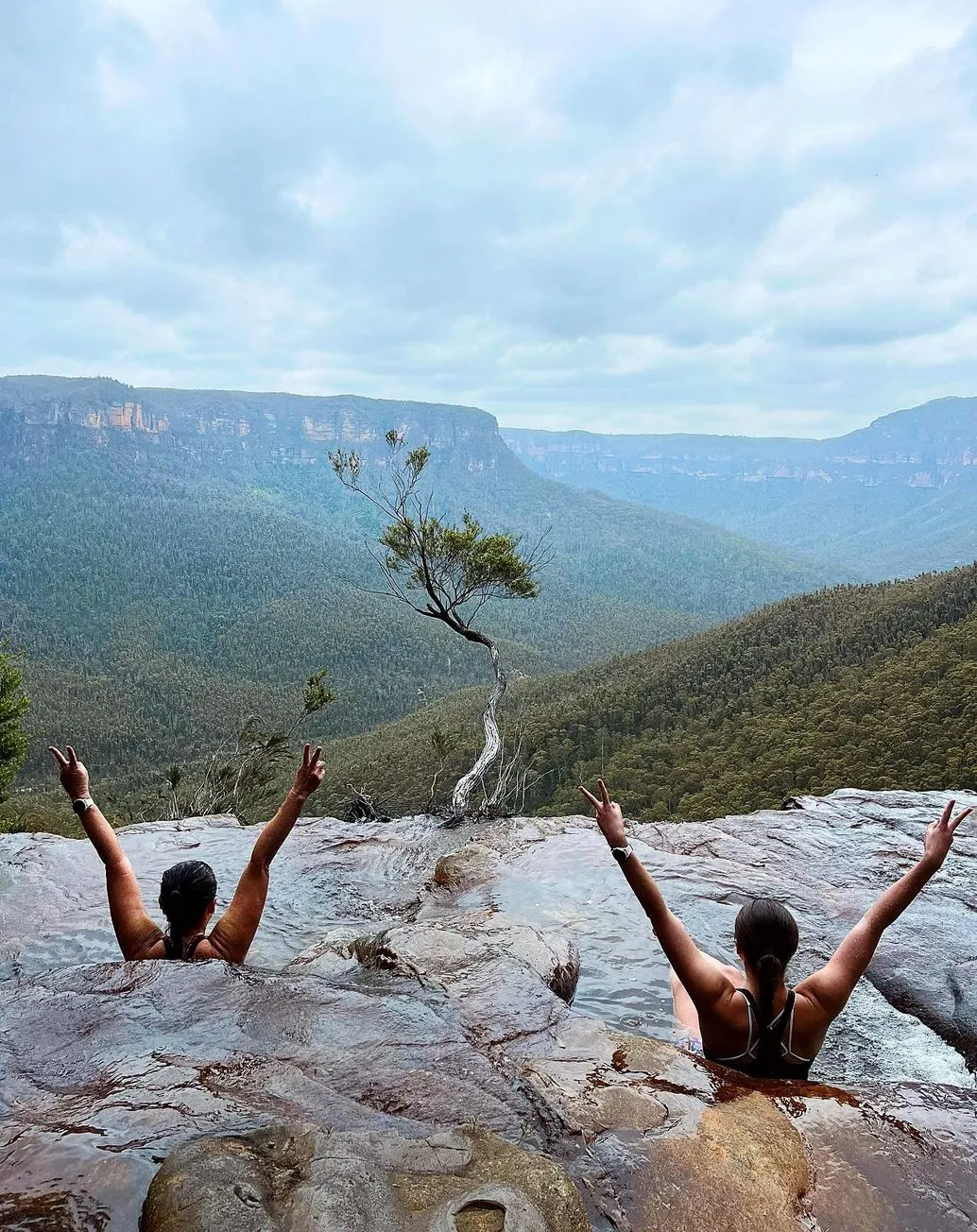
Fortress Canyon feels remote, but it sits just minutes from the Megalong Valley road system. The approach track winds through rainforest vegetation, giant water ferns, and naturally sculpted rock formations.
Expect:
Once you’ve nailed ropework, anchor checks and pack-floating, it’s time to step into the deep stuff. Intermediate canyons often sit near Evans Lookout Road and the Neates Glen Car Park, where the Grand Canyon Circuit and Grand Canyon Walking Track (one of the most popular canyon-adjacent routes) begin.
Good intermediate options include:
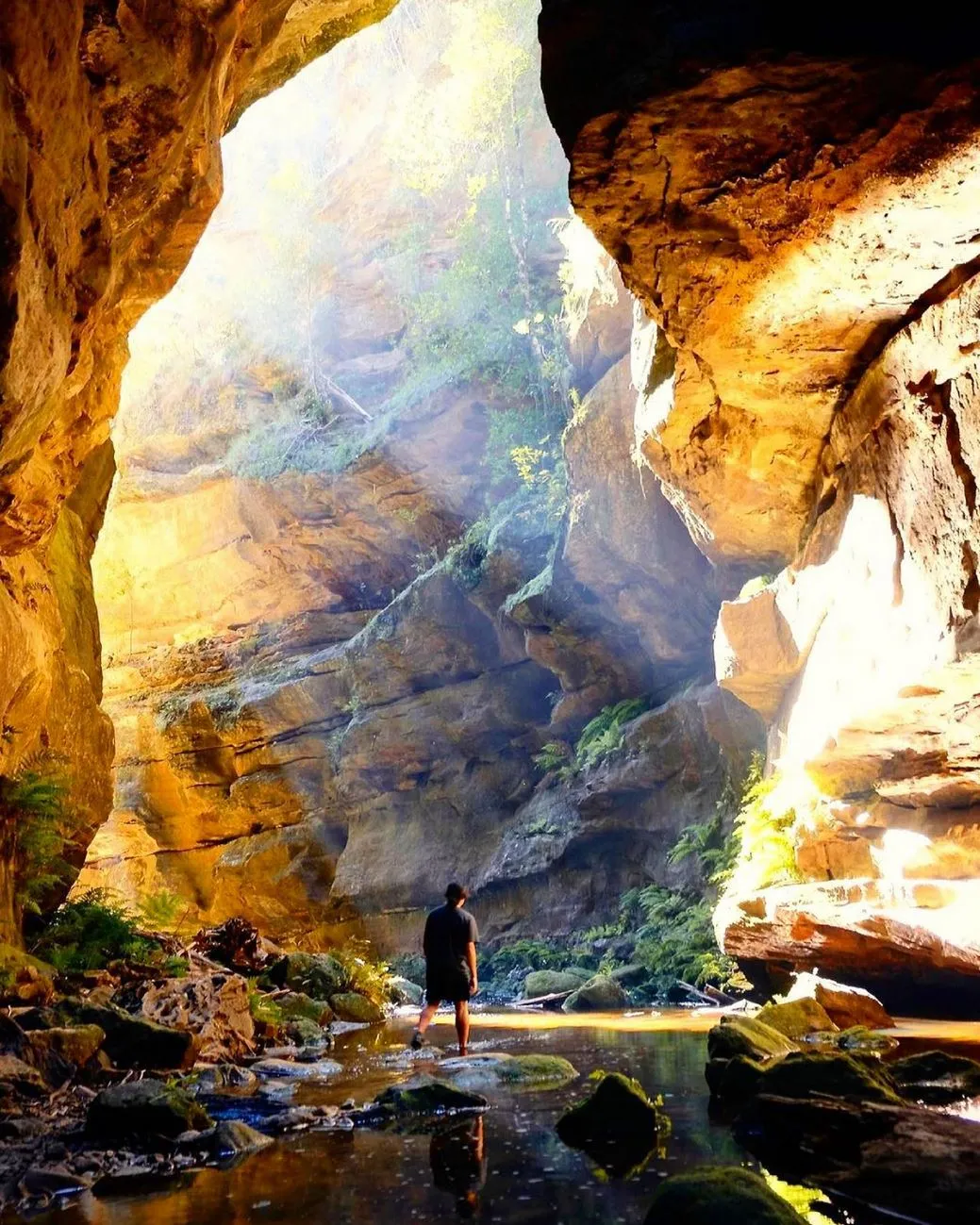
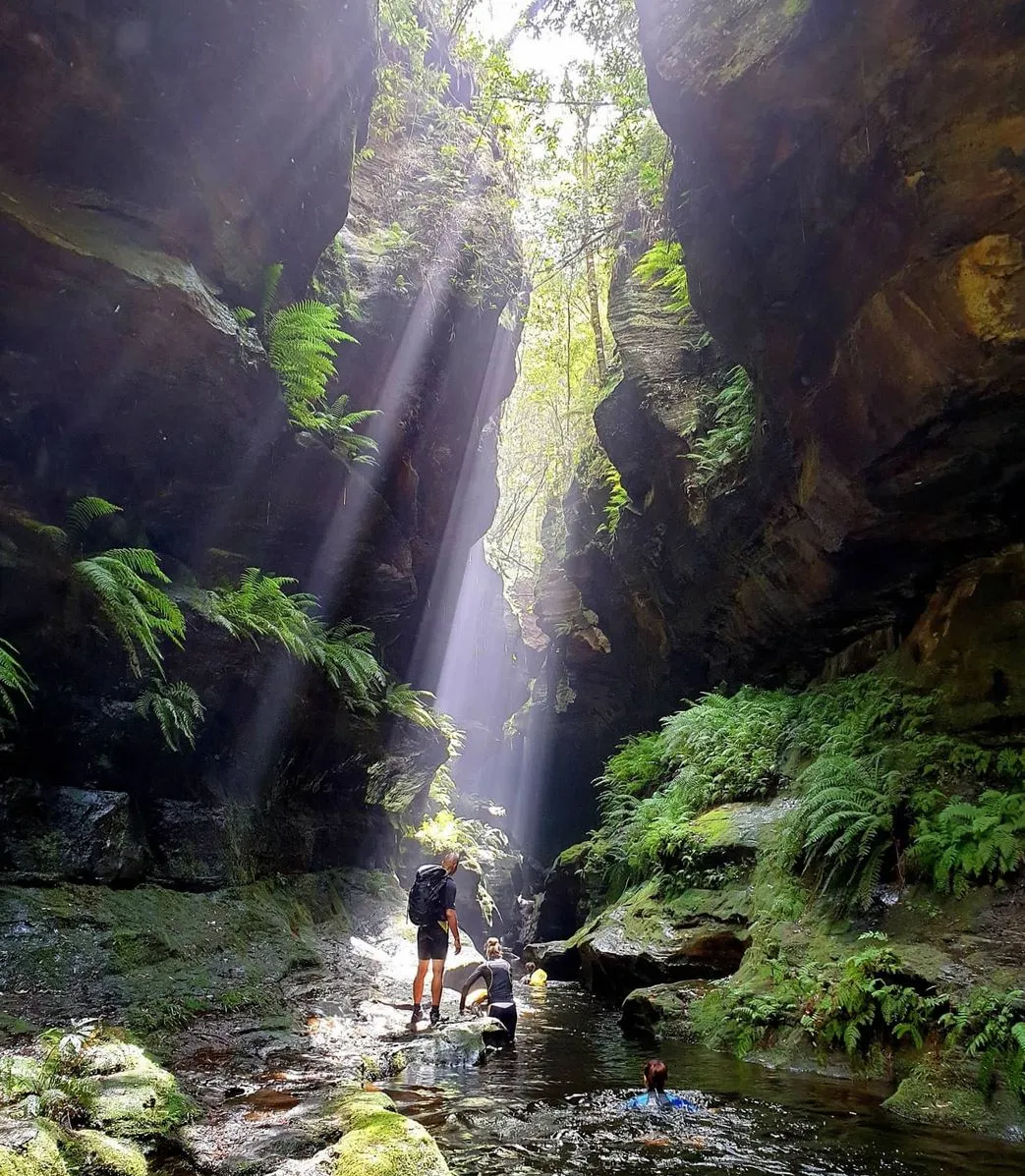
The Grand Canyon is not just a tourist track—it’s canyoning territory too. Within the canyon walls, you’ll find:
Located near the Neates Glen trackhead, this route includes rock paths, tight walkways, stairways cut into stone and signage following NSW’s Walking Tracks Classification & Signage standards.
Greaves Creek runs through this canyon year-round, so the pools are icy. You’ll be glad of every millimetre of neoprene.
Advanced canyons are the places where the wilderness meets massive, long drops off the side of the Grose Valley escarpments. And this is where all that beta on canyon conditions, gauge measurements and GPS data comes in handy – you’d be foolish to head in without it. Also, because you’re venturing into the real unknown here, some key maps pages (you know, the ones that only make sense if you’ve got a map), the CASA guidelines (you know, the ones that tell you where you can and can’t fly your drone), and the NSW Heritage Office rules are well worth a look too.
Some Examples of what we’re talking about:
If you have absolutely no idea how to tell if it’s too late to flow or can’t even figure out how to safely pull down in running water, then maybe think twice about heading on in.
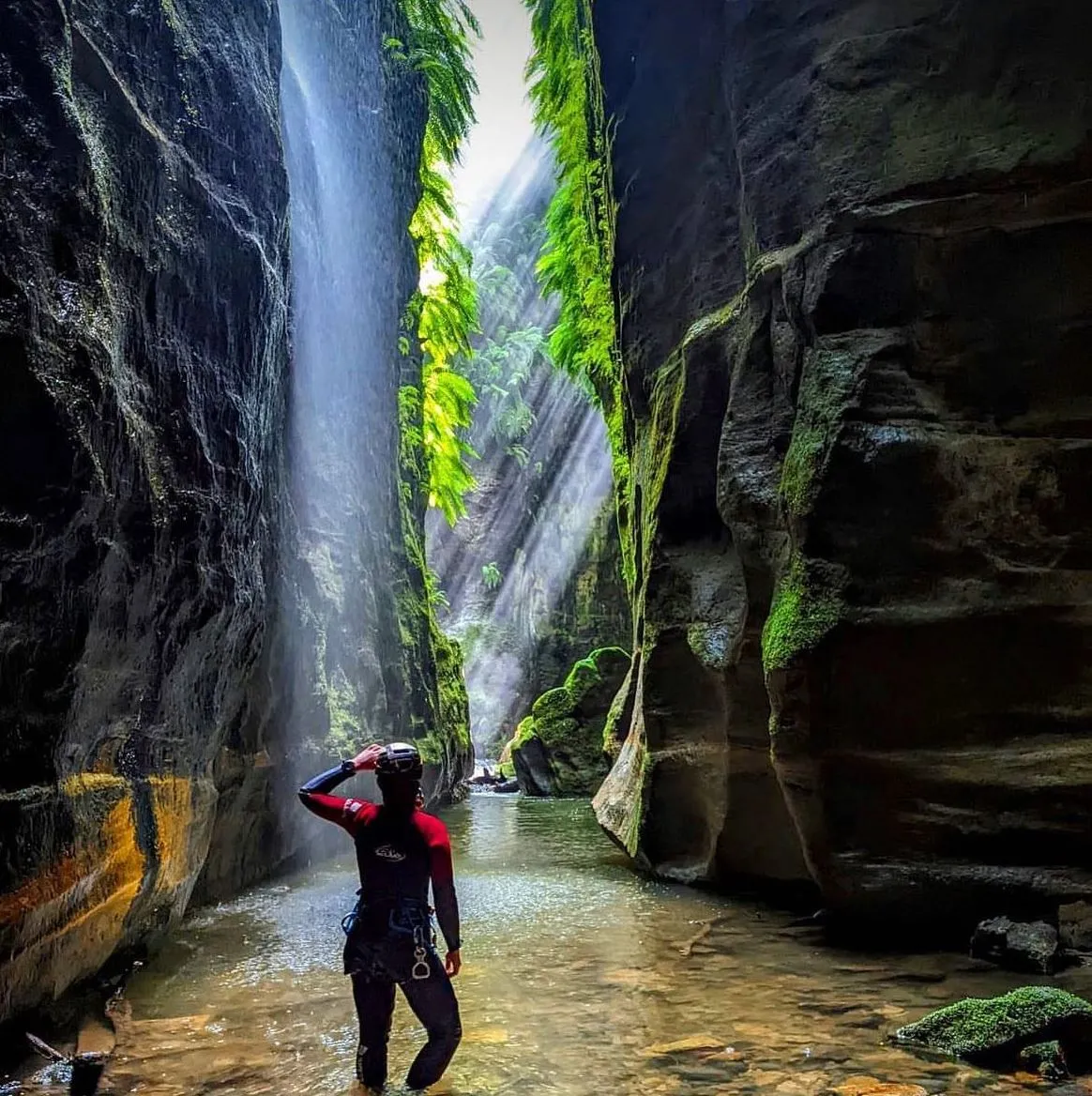
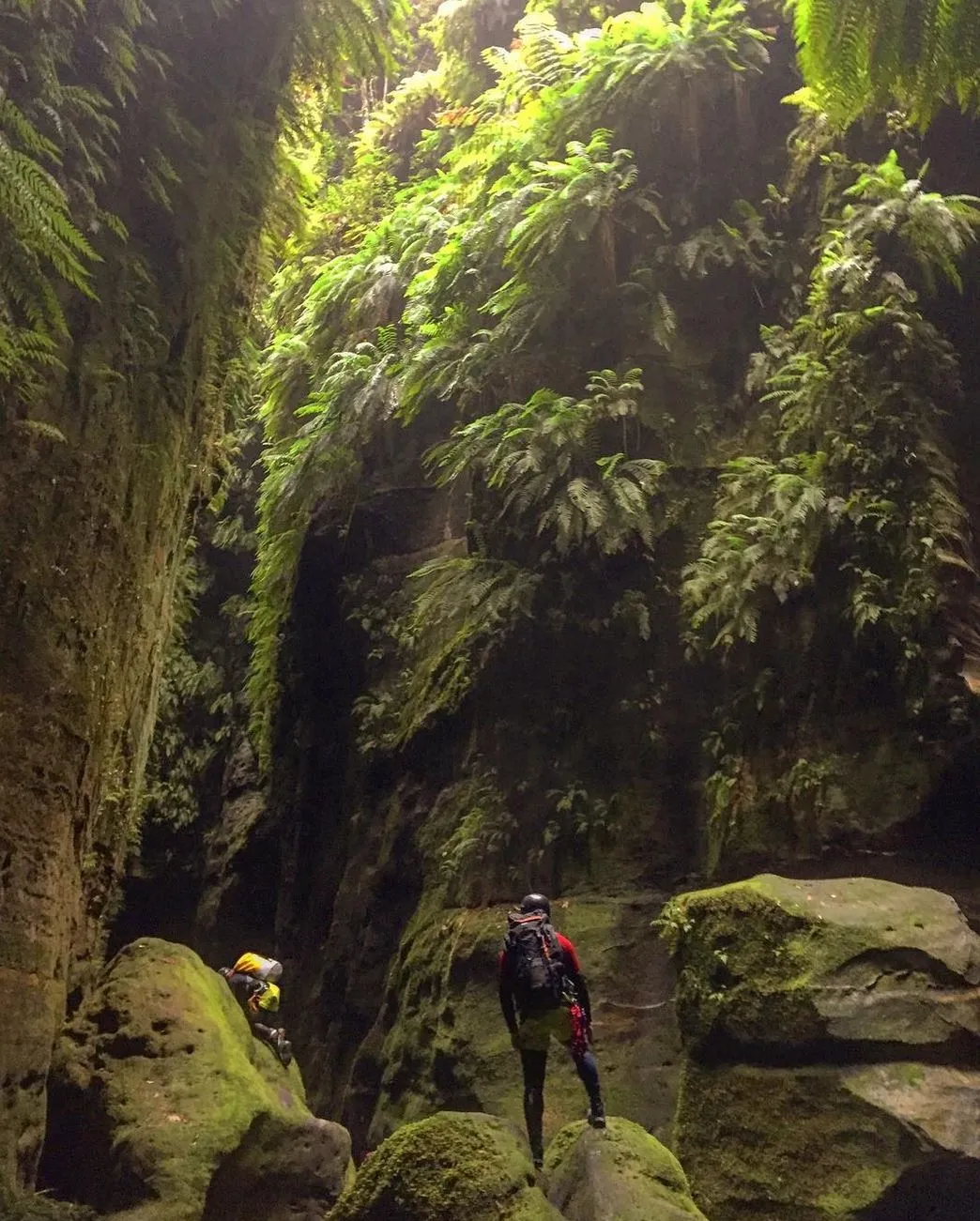
Canyoning gear – it’s your lifeline out there. In the Blue Mountains, the cold can sneak up on you in a big way.
Stuff You Really Need:
Nice to Have (But Don’t Leave Home Without Them):
If you’re new to abseiling into cold water, a guided trip with Blue Mountains Tours might be the way to go – they’ll look after you.
The weather in the Blue Mountains can be pretty wild. One minute you’re freezing, the next you’re sweating like crazy.
Summer (Dec – Feb)
Warm water, plenty of other people, mozzies and the occasional canyon closure due to fire risk
Autumn (Mar – May)
This is the best time for canyoning – stable temps, cold nights, but perfect water levels
Winter (Jun – Aug)
Not for the faint of heart – icy water, hypothermia risks are higher than ever
Spring (Sep – Nov)
After a rainstorm, the water flows are great, but there is always a risk of flash flooding
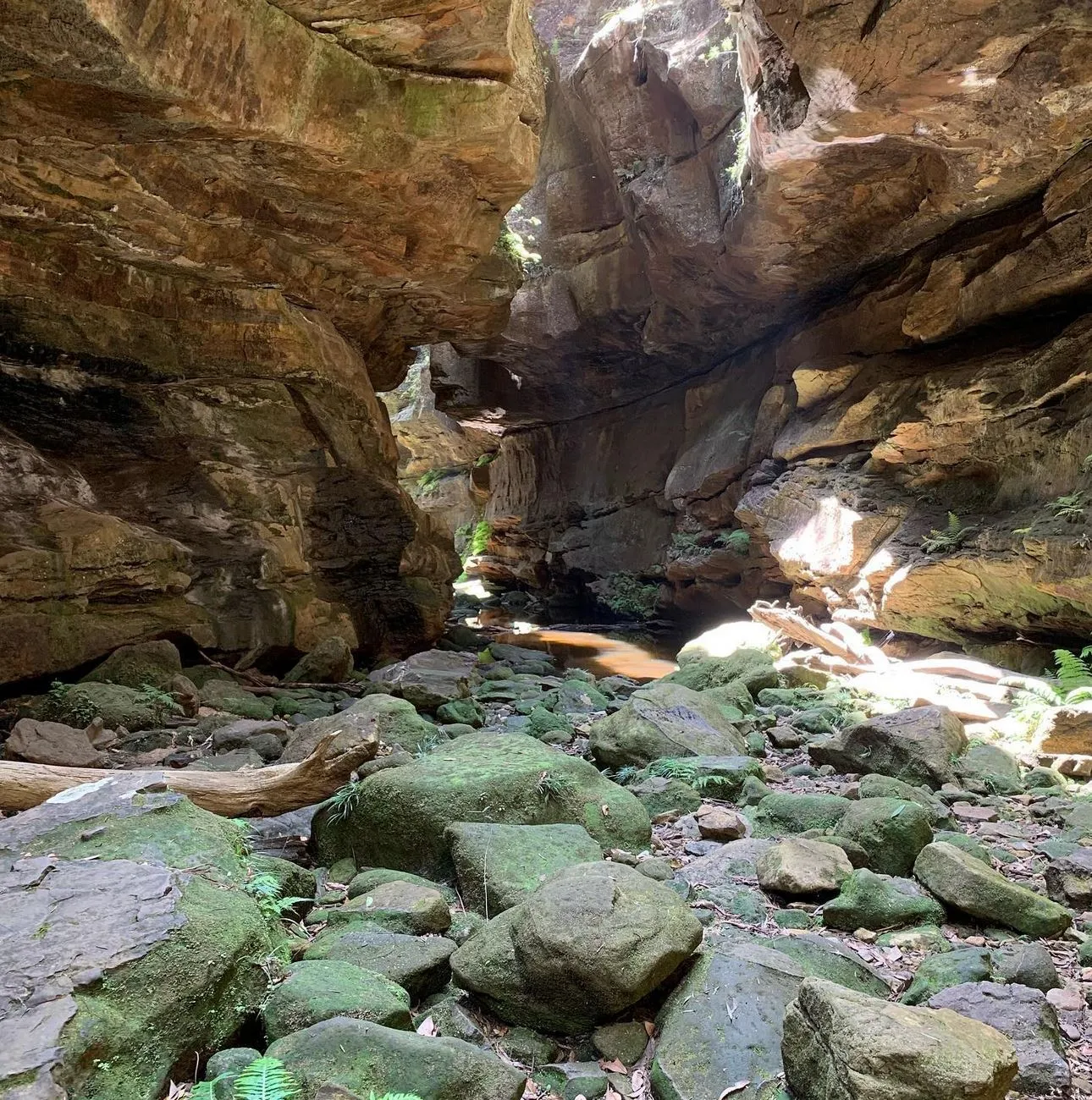
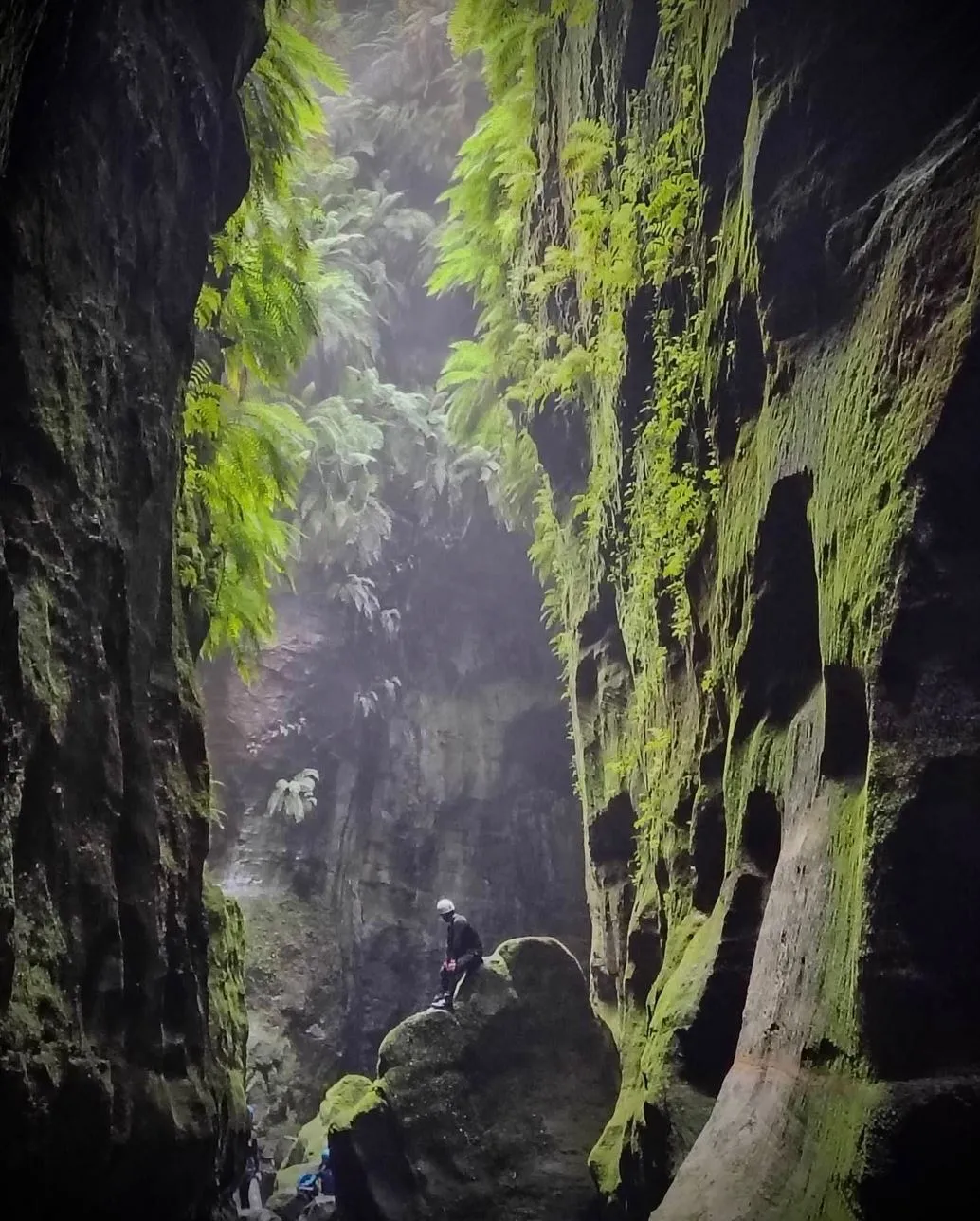
You learn things the hard way in this game – these little tips have saved my skin more than once.
First time canyoning? Prep like you’re meeting the in-laws for the first time – ready, hydrated, with a bit of a nervous edge
Check List:
| Season | Water Temp (°C) | Flow Level | Risk Profile | Notes |
|---|---|---|---|---|
| Summer | 14–16 | Medium | Medium | High foot traffic on the Grand Canyon Circuit |
| Autumn | 12–14 | Low–Medium | Medium–High | Best light for canyon photography |
| Winter | 8–11 | Low | High | No-joke hypothermia risk |
| Spring | 10–13 | Variable | High | Flash flooding risk elevates |
Slicing across the cliff walls like they had a personal beef with me. Dave slipped on a stepping stone, went straight into a plunge pool, and popped up shouting, “THAT WATER IS FROM ANTARCTICA!”.
We hauled ourselves to the viewing platform at Evans Lookout afterwards, wrapped our freezing hands around hot tea, and agreed that canyoning misery is the best kind of misery—because it turns into a story every single time.

Yes—if guided. The track itself is Grade 4, but canyon sections require rope skills.
Yes. It’s the main access point for the Grand Canyon Circuit and Greaves Creek systems.
No permit for standard canyoning, but NSW National Parks alerts must always be checked.
Almost always no, due to CASA guidelines and wildlife protection rules.
Yes — steep drop-offs, slippery rock paths and sudden weather changes.