How To Photograph The Milky Way At The Pinnacles: A Beginner’s Guide
How to photograph the Milky Way at the Pinnacles: a beginner’s guide basically boils down to three things: getting dark skies, keeping your camera settings simple, and making use of the landscape. I’ve learned this the hard way, standing out in the middle of Nambung National Park, thinking I had nailed it – only to later find out the focus was way off and my whole shoot was a complete waste of time.
The honest truth is this – Pinnacles genuinely gives you a great chance to capture the Night Sky properly, from the galactic core right on down to the Milky Way arch. But it won’t do all the work for you – you’ve still got to put some effort in. If your planning’s all over the place or you’re just winging it with your settings, you can expect to walk away with, at best, pretty average shots.
Why The Pinnacles Landscape Works — And Traps
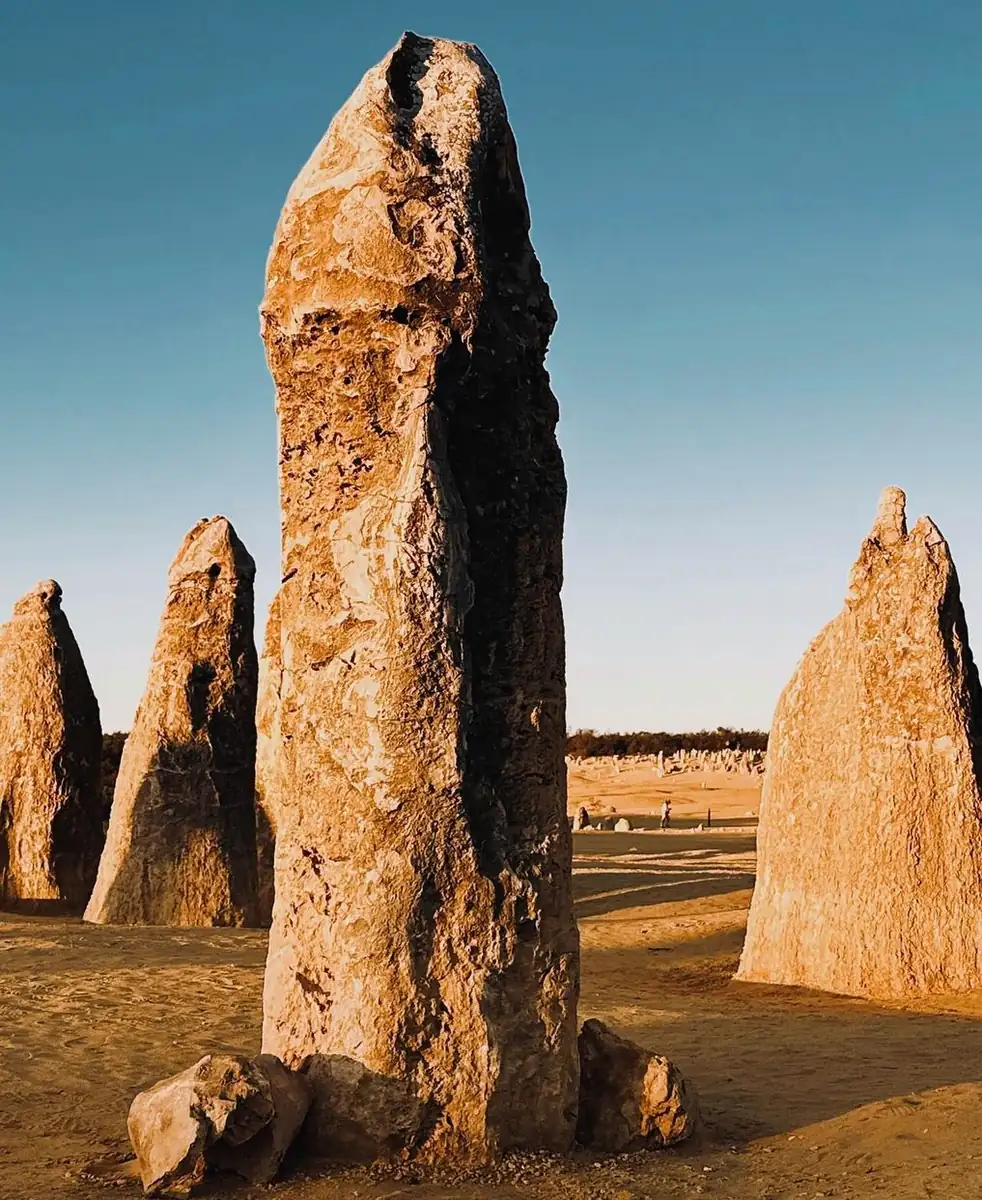
The Pinnacles are situated in a relatively low Light Pollution zone, which means you don’t get any of that nasty sky glow, and you can see the galactic bulge a lot more clearly. The open terrain makes for nice, clean horizons, and the limestone formations provide heaps of natural foreground to play with in your shots.
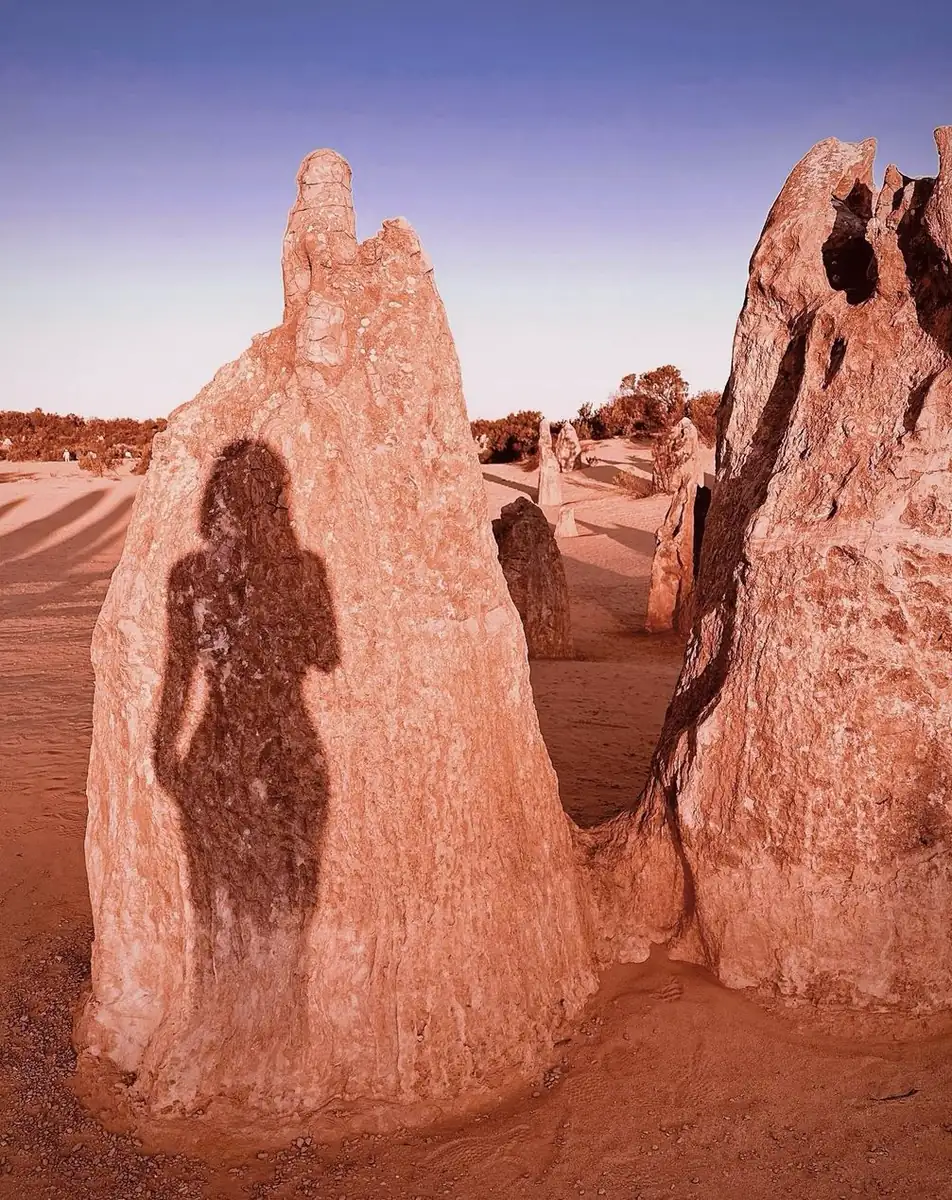
But it’s scale and depth that catch people out most of all. Those dramatic formations look amazing in real life, but as soon as you try to capture them through a lens, standing too far back makes them flatten out. I’ve seen heaps of travellers try to get the whole scene by shooting way wide, and the end result is an image with way too much sky and hardly any depth down at the bottom.
Expectation Vs Reality On Your First Shoot
| Expectation | Reality |
|---|---|
| Bright Milky Way every night | Only visible clearly during specific months and moon phases |
| One perfect shot will do it | You’ll take dozens to get one keeper |
| Warm coastal conditions | It gets cold and windy after dark |
| Easy to navigate | It’s confusing once you leave the track at night |
The biggest shock to most people is just how fast everything can change. One minute you’ve got a beautiful, clear dusk window – the next thing you know, you’re struggling to get much contrast at all because a thin layer of cloud rolled in.
Getting To The Pinnacles Without Losing Your Mind
From Perth, you’re looking at a 2 to 2 1/2 hour drive to get to the Pinnacles – depending on traffic and how many stops you make along the way. Most people head through Cervantes to top up on fuel – and to be honest, you probably should too, as soon as you’re inside the park, you’re on your own.
Try to get there before the golden hour kicks in. That gives you the chance to have a good scout around, sort your gear out and make a few adjustments before the light goes and things get properly dark. Parking is pretty straightforward along the loop drive, but don’t get too confident once the sun goes down – it’s pitch black out there. Get out of the car, and you’ll quickly struggle to work out which direction you’re facing.
It’s not the driving that catches people out – it’s the getting back home afterwards. Fighting against fatigue after a late shoot is a real thing, especially if you’ve been out in the cold for hours on end. If you’re not up for driving back late, it’s a good idea to plan in a rest or an overnight stay.
Timing It Just Right For The Milky Way
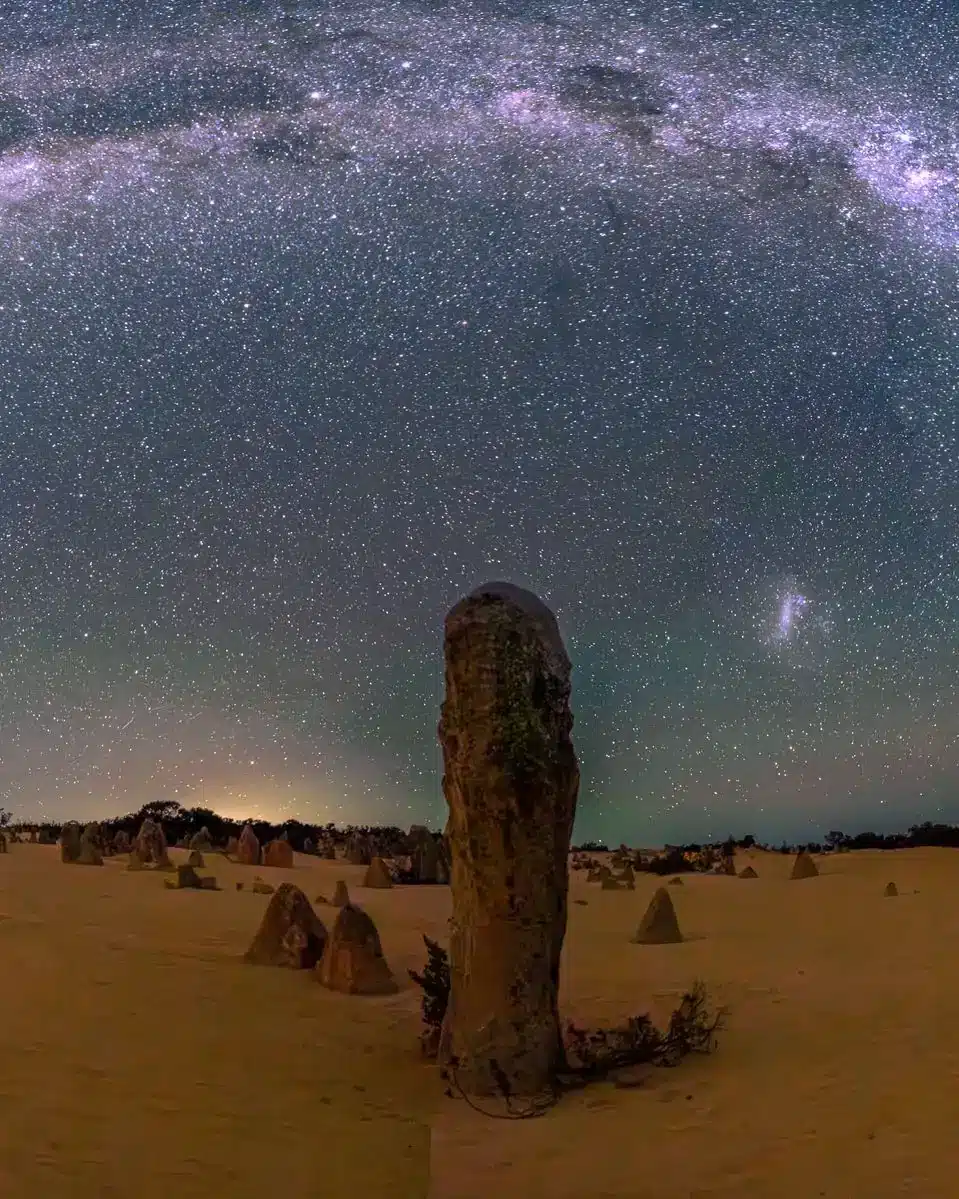
You’re not just photographing stars out there – you’re going for the Milky Way’s galactic core, and that’s a bit more precise than just snapping a few stars in the sky. Timing is everything.
The best time to get started begins after Nautical Twilight, when the sky is properly dark. That earlier dusk window is just there for you to sort out your setup – if you start snapping too early, you’ll just ruin the detail and end up with a flat image.
Moon phases are actually more important than anything else. Even a tiny bit of moonlight can introduce sky glow and wipe out the detail you’re trying to capture. Always aim for a night as close to a new moon as you can get – and use a Dark Sky Map to figure out which direction to point your camera in to avoid all that annoying light pollution from distant towns and cities.
As for seasons, the difference is pretty noticeable. Autumn and winter are best for getting a clear view of the galactic bulge, which sits higher in the sky for longer. In the summer, you’re mostly stuck with the summer constellations, which are still pretty interesting but not the classic Milky Way shot people usually want.
Camera Setup That Works In The Real World
You don’t need stacks of fancy gear – what you really need is to be in control of what you’ve got. A basic setup, properly used, will kick the pants off a bunch of expensive stuff that’s used carelessly.
Start with the basics: aperture wide open (f/2.8 if you can get it), a shutter speed of 15–25 seconds, and an ISO of 1600–3200. That combo brings in enough light without ending up with Star Trails or noise that looks like it’s been smothered in cheese.
Don’t overlook White Balance – it’s a common mistake. Manually set it between 3500-4000K to keep the Night Sky looking like it should, rather than a warm, golden mess.
Focus is probably where most people go wrong. Autofocus won’t cut it in the dark, so switch to live view, zoom in on a bright star, and get it sharp manually – lock it in, and you won’t go wrong. If you mess this up, nothing else is going to matter.
Using the Landscape to Its Full Potential
The limestone formations are your ace in the hole – as long as you use them to tell a story.
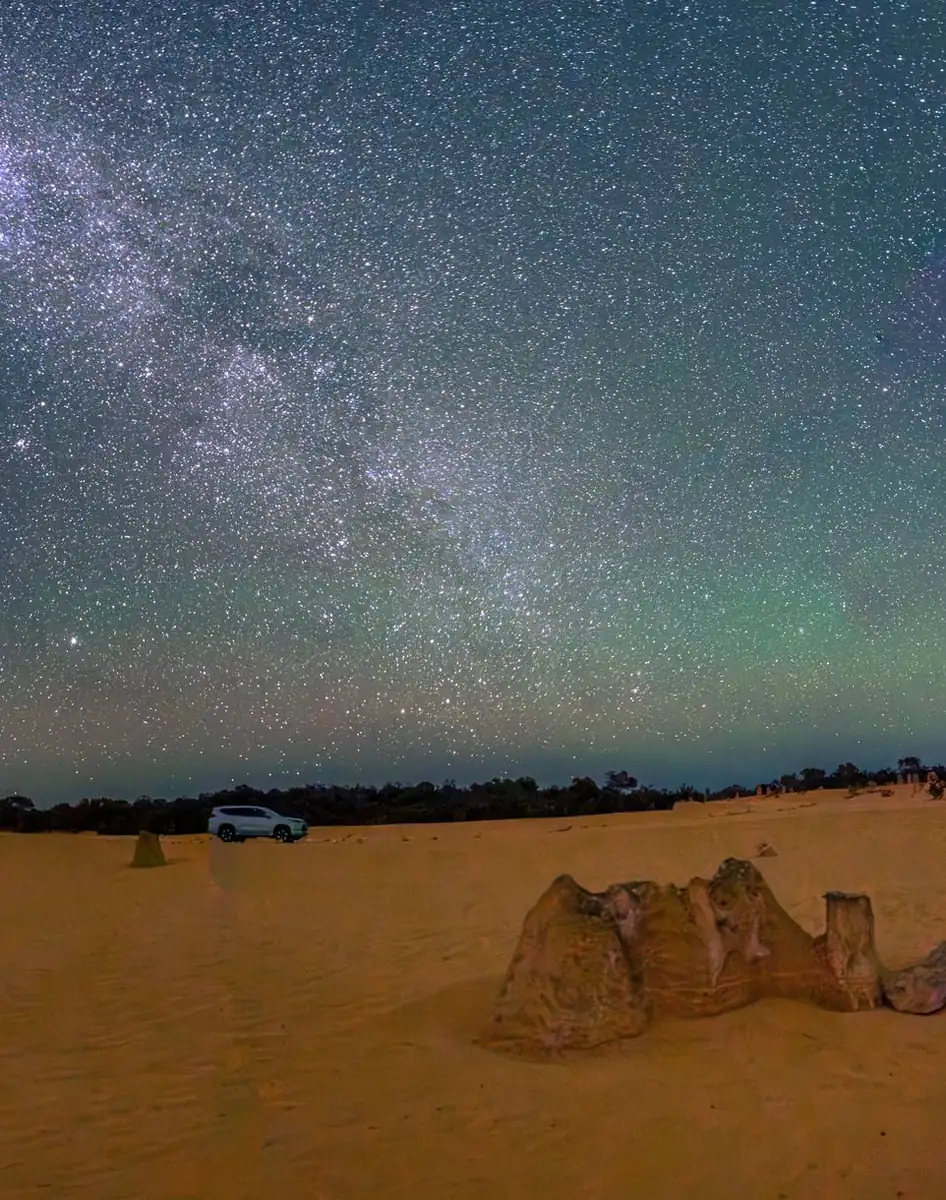
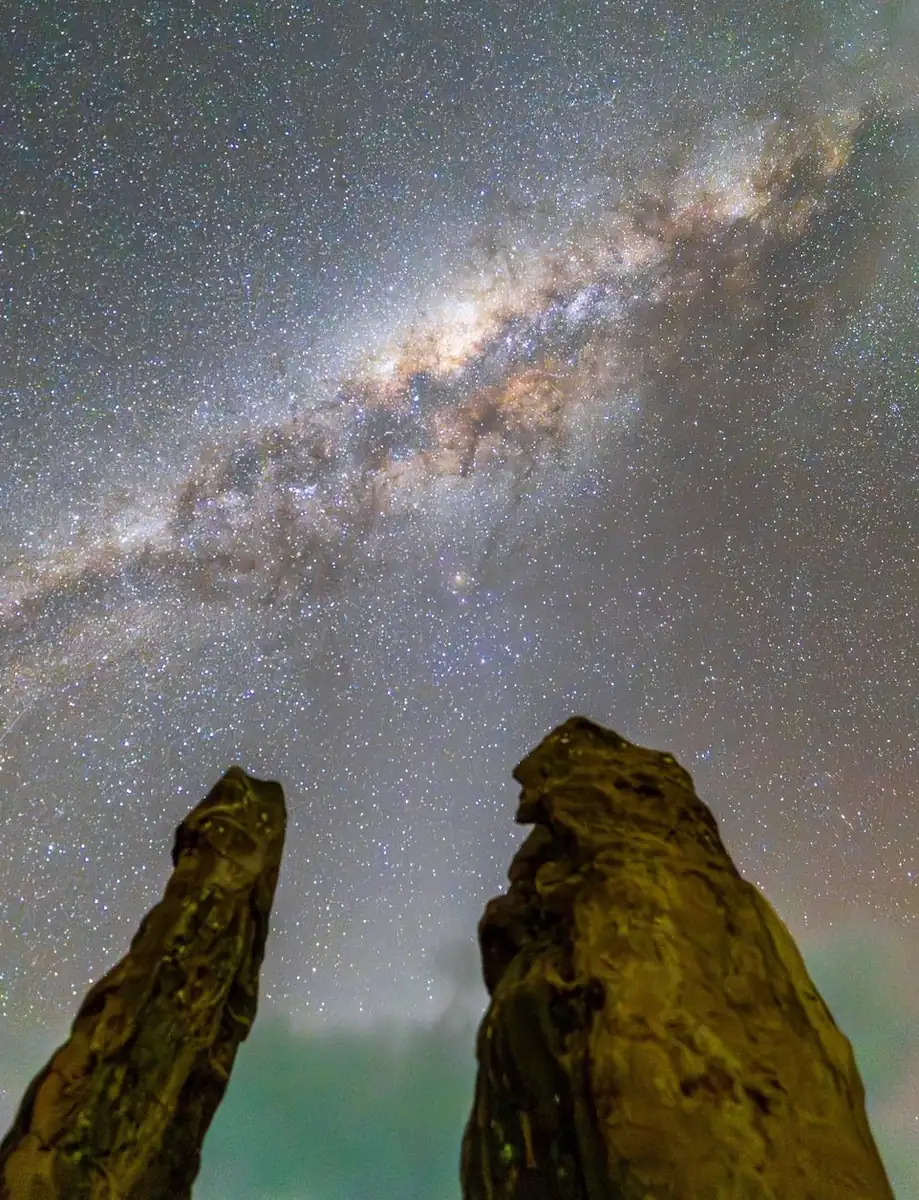
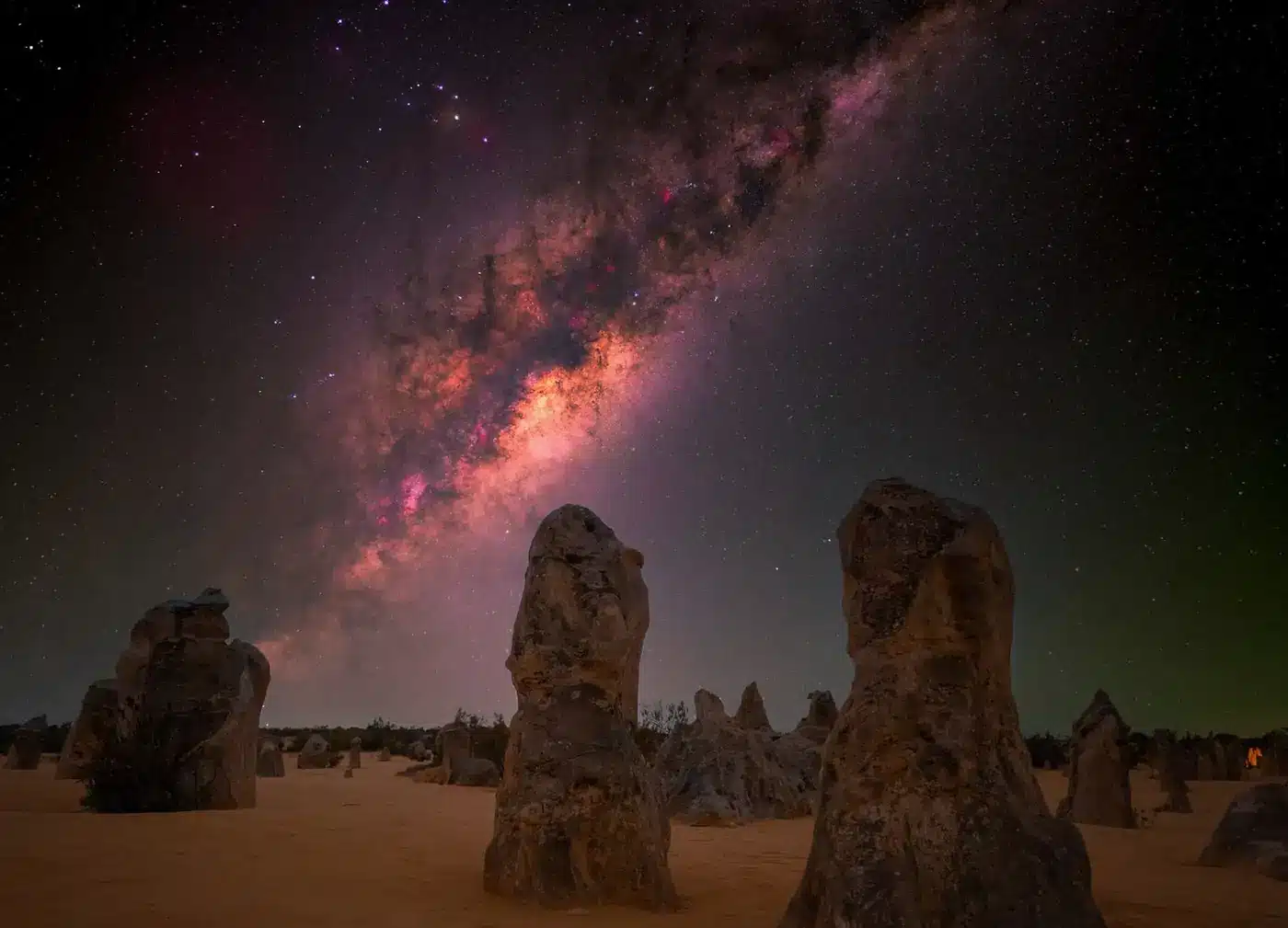
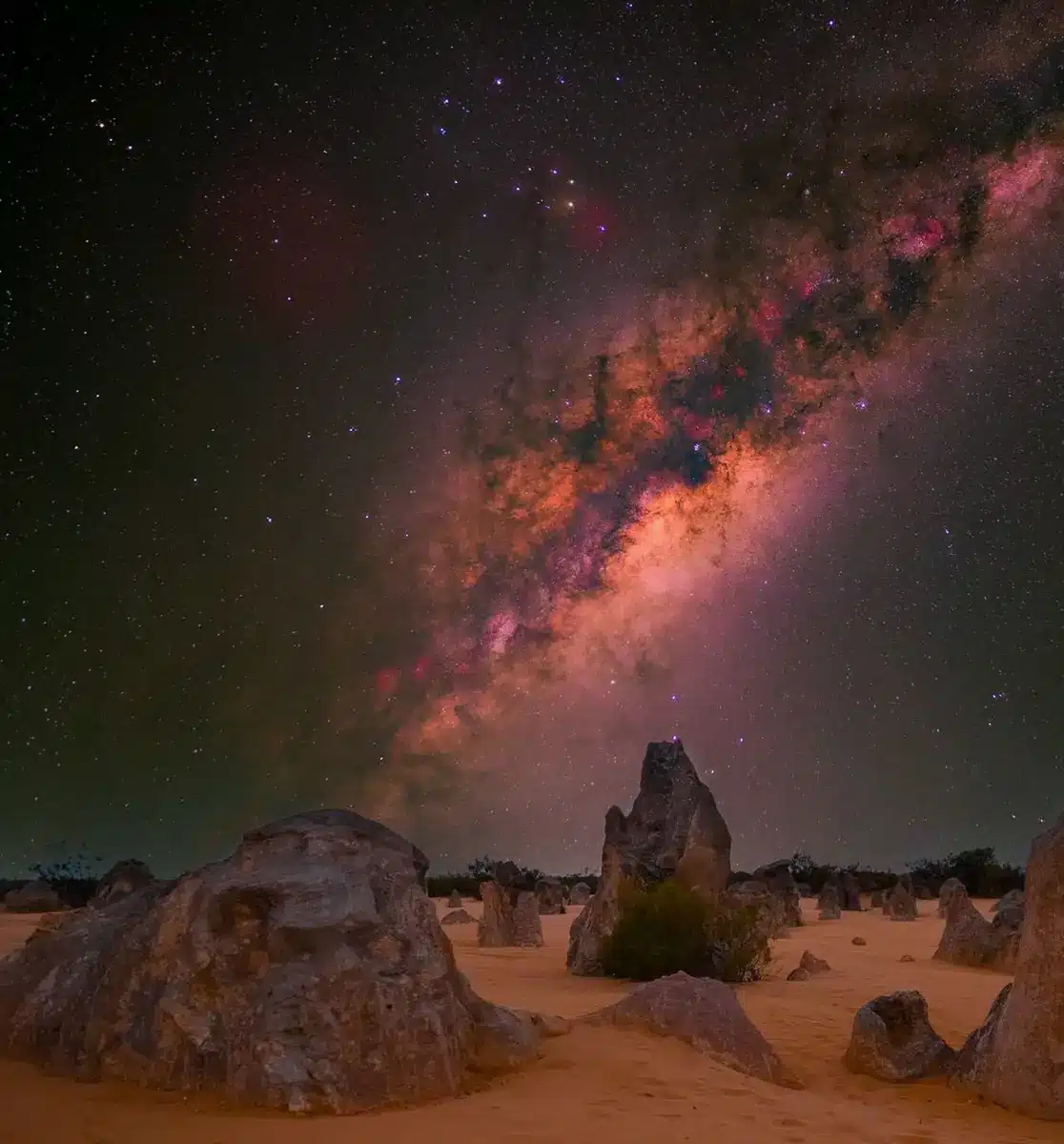
Get yourself down low, move in close, and frame the shot so the galactic core rises up behind a nice, strong foreground element. That’s what gives depth and clout – standing way back and taking a wide shot might feel safer, but it usually ends up looking flat.
A bit of subtle foreground lighting can work wonders – a quick light sweep adds some real texture to the formations without overpowering the sky. Don’t go too big with the light, or it’ll ruin the whole mood.
I learned this the hard way after over-lighting a scene – the rocks looked great, but the Milky Way got lost in the background. Balance is everything.
What to Expect When You Hit the Ground
This is no sterile studio setup – you’re in a bit of coastal scrub with all its attendant quirks.
The wind can pick up fast across the sand dunes once the sun goes down, and before you know it, the temperature drops faster than you’d expect. In warmer months, you might feel it isn’t so bad, but after a few hours standing still, it can be biting.
And then there’s dust – it settles on your lens and softens the images if you don’t keep an eye on it. A quick wipe between shots can save a whole heap of frustration later.
Navigation is a bit of a quiet challenge -once it’s dark, everything looks the same. Stick close to your entry point, keep your wits about you, and try not to wander too far from your vehicle.
Costs And Keeping Your Expectations Real
This trip isn’t going to break the bank – but you can’t get it for free anyway.
| Item | Typical Cost (AUD) |
|---|---|
| Park Entry | ~$15 per vehicle |
| Fuel Return (Perth) | $40–$70 |
| Food Stop (Cervantes) | $15–$30 |
| Accommodation Nearby | $120–$250 |
Some travellers just prefer booking with operators like Pinnacles Tours, especially if they are total newbies to astro photography. It takes all the guesswork out of figuring out when and where to set up, which I figure is where most newbies get stuck.
Common Mistakes And How To Avoid Them
The biggest blunders aren’t really about being a good photographer – it’s the little things.
Folks often rush into this without first checking out the moon phase. They keep relying on autofocus like it’s gonna magically get the job done. And they underestimate just how dark and disorienting the whole park can get at night, which can be pretty overwhelming. And of course, they expect to get that perfect shot on the first try.
But let’s face it – astro photography just doesn’t work that way. You end up taking a bunch of long exposures, tweaking the settings and the composition as you go along – it’s just part of the deal.
Another pretty common mistake is ignoring how long your lens is meant for. Wider lenses let you keep your shutter speeds up before the stars start to get all blurry. Get that wrong, and you end up either with blurry stars or underexposing the whole sky.
Quick Scenarios Based on Real-Life Traveller Behaviour
If you only have one evening to play with, don’t try to cover the whole area. Pick one place with a dense cluster of formations, set up early, and make a commitment to that spot. Moving around a lot just eats up the time you’ve got with the darkness.
If you’re brand new to manual photography, don’t get too bummed out if you don’t get it right away. You’ll probably still get some usable shots, but they may not be perfect at first. That’s just how it goes.
If you are chasing after getting a full Milky Way arch, then you are gonna have to move up to some more advanced techniques – like doing a multi-row panorama using a panoramic levelling base. That’s definitely not beginner territory – but it’s something to grow into once you get the basics down.
Who This Experience Is Really For
This experience is for people who are okay with waiting, adjusting, and just working through a few failed shots to get a good one. If you enjoy hanging out in quiet, remote spots and don’t mind a bit of trial and error, then you’ll love it.
It’s really not the best fit for people who expect instant results or get really uncomfortable in the dark. There’s no infrastructure out here at night – it’s just you, your gear and the landscape.
Final Thoughts From Paul - Keep It Simple, Stay Patient
The Pinnacles will always reward patience more than fancy gear. You don’t need some super-duper advanced camera equipment to get a stellar Milky Way shot – you need to be in the right place at the right time, have a solid foundation of basics, and be ready to adjust to whatever the night throws at you.
I’ve had nights where everything fell into place perfectly – and others when I packed up my gear early because the conditions just weren’t cooperating. That’s just part of the game when it comes to capturing the Night Sky.
If you want to cut down on the hit-and-miss side of things, you can take a look at guided options like Pinnacles Trips (they can help sort out the timing and setup for you). But even if you’re going it alone, you’ll still get there – just be prepared to learn a few lessons along the way.
FAQ
What time of night is best for shooting the Milky Way here?
Honestly, it’s after full darkness, once Nautical Twilight has come and gone, and you can see stars everywhere.
Why are my night shots all blurry, even though I've got a tripod?
I reckon it’s probably because you haven’t got your focus nailed down. Try using live view and manual star focus – autofocus just won’t cut it.
Do I need a wallet-busting camera to do some decent astro photography?
No way. A basic camera, a decent wide lens and a good tripod will get you started.
How do I stop getting those pesky star trails in my shots?
Just keep your shutter speed around 15-25 seconds, depending on your lens’s focal length.
Can I visit Pinnacles National Park at night?
Technically, yes – but you need to be prepared to fend for yourself. There are no lights or facilities after dark, so plan ahead.